


From Clicks to Foot Traffic: A Performance Marketing Playbook for Singapore Retailers
Getting someone to notice your brand is one battle. Getting them to actually walk through your door is another. That's where performance marketing comes in, and it's also where a lot of retail brands get stuck.
The Challenges Retail Companies Face
Retail is a different beast from pure e-commerce, and the challenges that come with it are pretty unique.
Finding the right audience and the right location. Unlike an online-only store that can ship anywhere, a retail brand lives and dies by geography. A campaign that performs brilliantly for someone browsing from Jurong doesn't mean much if your nearest store is in Orchard. Retail marketing has to account for where people actually are, and how close that is to where you actually sell.
Standing out in a genuinely noisy market. Singapore's retail scene is dense. Malls packed with competing brands, social feeds full of similar-looking ads, and shoppers who've gotten very good at scrolling past anything that doesn't immediately grab them. Cutting through that requires more than a nice product shot; it takes ads creative that's built around what actually makes your brand different.
Managing seasonality and sensitive timing. Some retail categories are only "hot" during specific windows. Take a brand like Mr. Bucket Chocolaterie, a huge chunk of demand naturally clusters around occasions like Valentine's Day, when everyone's suddenly hunting for a thoughtful gift. The real challenge isn't capturing that seasonal spike (that part's almost easy); it's figuring out how to keep people walking in and buying during the quieter months in between.
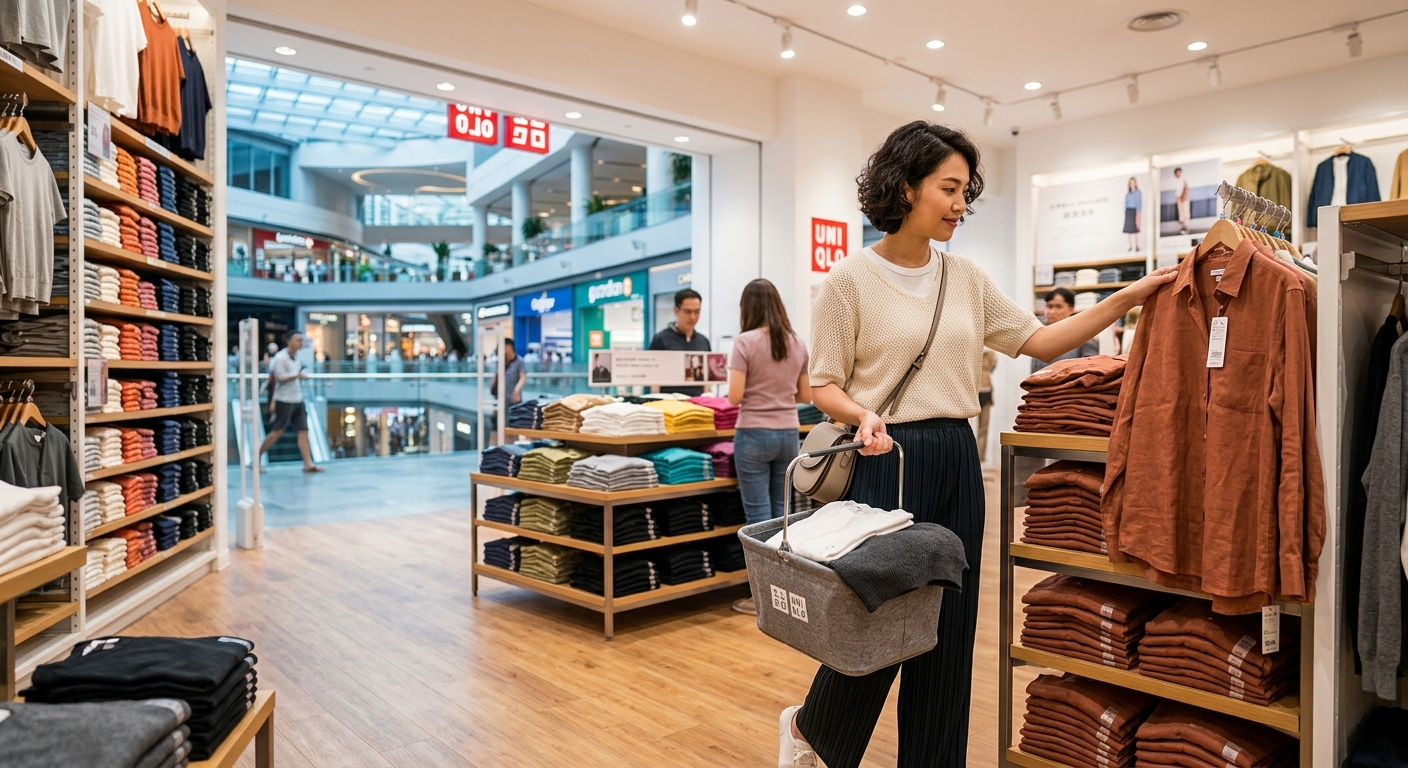
How Performance Marketing Works for the Retail Industry
So what does performance marketing actually look like when you're trying to solve for all of that?
- Building awareness with the right audience, in the right radius. This means running campaigns across social media, Google, and programmatic channels while specifically targeting people who live, work, or shop near your physical stores, so the awareness you're building has a real chance of turning into a visit.
- Appealing to different segments with different creatives. Not every customer walks into your store for the same reason. A brand might need one set of creatives for people chasing a specific product, and a completely different set for people drawn in by a broader lifestyle or experience angle.
- Running cross-location campaigns for past purchasers. If someone's already bought from you at one outlet, there's an opportunity to bring them back or introduce them to another location that's more convenient for them.
- Tracking who actually shows up because of the ads. This is the piece that separates retail performance marketing from a normal digital campaign, connecting the dots between someone seeing an ad online and someone walking into a store, whether that's through special trackable promotions or dedicated third-party attribution tools.
The Platforms That Matter
Retail brands in Singapore typically see the strongest results from a mix of:
- Meta: for both awareness and highly targeted local reach
- Google PMax & SEM: capturing people who are actively searching, plus broader reach through automated bidding across Google's inventory
- TikTok: increasingly essential for reaching younger, discovery-driven shoppers
- Programmatic: including display and DOOH, useful for building broad, location-aware visibility
No single platform does it all. The brands that see the best results are usually the ones running a coordinated mix, not just leaning on whichever channel is easiest to manage.
The Metrics That Actually Matter
It's tempting to get distracted by vanity numbers, such as impressions, likes, follower counts. For retail, three metrics tend to matter far more:
- Revenue: the actual dollars coming in
- ROAS (Return on Ad Spend): how efficiently that revenue was generated relative to what was spent
- Footfall: whether the campaign is actually driving people into physical stores, not just clicks on a screen
If a campaign is only being judged on online metrics, retail brands are missing a huge part of the picture, because for most of them, the store is still where the real revenue happens.
Why Retail Companies Need a Performance Marketing Agency
Running retail campaigns in-house is possible, but there's a reason so many brands eventually bring in a specialist partner.
- Agencies bring experience and playbooks, years of learning about what works for audiences, creatives, and campaign structures across different retail categories. They also stay agile enough to adapt, since no two retail businesses behave exactly the same way.
- Agencies can help brainstorm the trickier technical side of things, like how to actually track which online ads are translating into offline store visits, which isn't always straightforward.
- Agencies typically work across multiple industries, they bring in perspective, patterns and ideas borrowed from other sectors that a brand focused purely on its own category might never think to try.
Why KPI Media for Retail Companies
KPI Media has worked directly with well-known retail names in Singapore, including eyewear brand OwnDays and artisan chocolate brand Mr. Bucket Chocolaterie. Those are real-world experiences that feed back into sharper campaign insights for every retail client after them. On top of that, the team knows when to lean on a proven playbook and when a situation calls for something more agile.
KPI Media also works with clients expanding across Southeast Asia, so if your retail brand has ambitions beyond Singapore, there's experience in building out strategy, localisation included for that kind of regional growth. That's been true even in the other direction: KPI Media worked with Cozmo, a UK-founded furniture brand, as it expanded into Singapore both online and in physical stores.
And then there are the credentials. KPI Media is a Meta Business Partner, a Google Premier Partner, and a TikTok Marketing Partner, badges held by a relatively small percentage of agencies, and a signal of consistent platform performance and account health. Being a platform partner also means faster access to updates whenever Meta, Google, or TikTok changes something on their end, which, in ad tech, tends to happen often.
Case Studies: Retail Clients

Club21
Overview
Club21 is a Singapore-founded luxury fashion retailer established in 1972, offering designer apparel, accessories, and lifestyle products from over 250 global brands through more than 150 stores across Asia and beyond.
Challenges
Before working with KPI Media, Club21 was leaning almost entirely on Meta Ads. The brand needed a partner who understood fashion retail well enough to spot untapped revenue opportunities beyond a single platform.
Strategy
KPI Media expanded the campaign mix beyond Meta into Google and TikTok, including GMV Max campaigns to tap into TikTok Shop as a new revenue stream. The team also identified which products had the strongest sales potential and timed promotions around the right occasions, while running ongoing collaborative A/B testing with Club21 to sharpen creative and messaging based on real audience response.
Result
Within the first two months, the campaign exceeded its sales target by 161%, with consistent ROAS delivered across every platform in the mix.
Mr. Bucket Chocolaterie
Overview
Mr. Bucket Chocolaterie is a Singapore-based artisan chocolate brand known for high-quality cacao sourced across Asia, elegant gift packaging, seasonal releases, and hands-on chocolate-making workshops.
Challenges
Chocolate is a naturally seasonal category, demand spikes hard around occasions like Valentine's Day and Easter, then drops off in quieter months. The challenge wasn't capturing the seasonal rush; it was keeping the brand relevant and top-of-mind the rest of the year.
Strategy
KPI Media built out audience differentiation around Mr. Bucket's two core offerings: premium chocolates and the workshop experience, each with tailored messaging. A multichannel funnel strategy guided different audiences toward the same end goal, while continuous A/B testing across keywords, creatives, and ad copy helped the team find what actually converted. Campaigns were also optimised against both performance data and real gifting trends, not just the numbers.
Result
Over more than a year of partnership, the brand consistently achieved ROAS more than 150% above target, particularly during peak gifting periods, while staying visible and competitive in a crowded seasonal market year-round.
Cozmo

Overview
Cozmo is a UK-founded furniture e-commerce brand serving the middle-to-upper market with modern, sleek designs, known for letting customers order free fabric swatches and get involved in the design process. Cozmo expanded into Singapore in 2024.
Challenges
Cozmo had already set up shop in Singapore but hadn't yet advertised digitally, meaning near-zero brand awareness among local shoppers. The priority was introducing the brand to the right audience from scratch.
Strategy
KPI Media focused on an upper-funnel strategy, prioritising visibility and awareness through Meta, Google SEM, and Performance Max. Creative messaging, visuals, audience segments, and CTAs were continuously A/B tested and refined. The team also worked closely with Cozmo to track offline results, keeping a close eye on what was actually driving people into stores.
Result
Within six months, blended online and offline revenue grew 4.5X, alongside a significant increase in offline store visits directly attributed to the digital campaigns.
OwnDays
Overview
OwnDays is a Japanese eyewear brand founded in Tokyo in 1989, with hundreds of stores across Asia, Australia, and the Middle East. The brand is known for transparent, all-inclusive pricing and glasses ready in as little as 20 to 30 minutes.
Challenges
OwnDays had worked with multiple agencies before KPI Media and was looking for a partner who could both improve performance and build a more accurate way of measuring offline conversions from online campaigns.
Strategy
KPI Media combined historical campaign data with fresh market research to build new strategies rather than simply repeating what had worked before. The team restructured the account to better match product categories with the audiences most likely to buy them, and ran multi-channel campaigns across Google Ads, Meta Ads, TikTok, Programmatic Display, and Digital Out-of-Home. Each with creative tailored to specific customer segments. To measure real-world impact, KPI Media also worked with a third-party partner specialising in connecting online activity to offline store visits.
Result
The campaign delivered 3X ROAS, exceeded OwnDays' Singapore footfall target, and established a reliable offline attribution system the brand didn't have before.
Ready to Turn Clicks Into Store Visits?
If your retail brand is fighting for attention online but struggling to see it translate into people actually walking through your doors, that's exactly the gap performance marketing is built to close. Book a free strategy session with KPI Media's Chief Growth Officer (worth S$250), no obligation, just a real look at where your current marketing is leaving footfall and revenue on the table.










Let us build your acquisition engine
Our Founder will personally propose a custom media plan to crush your KPIs.